

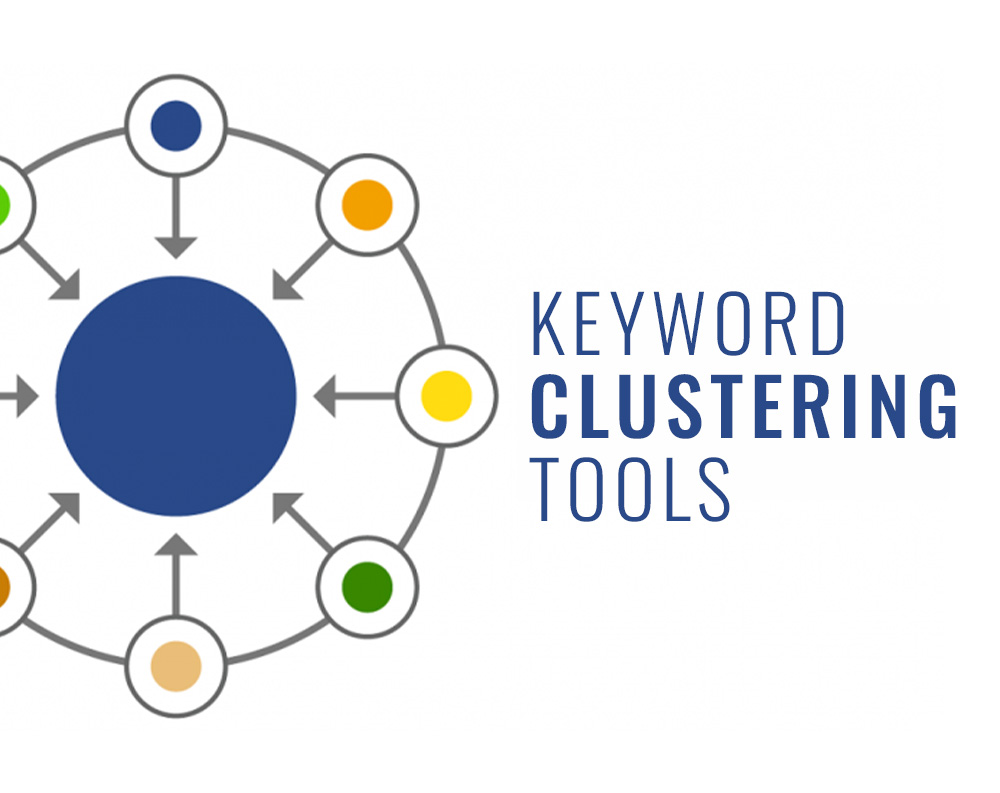
If you’ve ever tried doing SEO with just a list of keywords, you probably already know how messy things can get. You end up with dozens (sometimes hundreds) of keywords, but no clear idea of what goes together, what to write first, or how to structure your content.
That’s exactly where keyword clustering tools change the game. Instead of treating every keyword as its own separate topic, these tools group them based on search intent and real Google results.
Even 98% of SEO professionals say keyword clustering is important or highly valuable for their content strategy, as it results in a clean, structured content plan that makes sense to both users and search engines.
What Are Keyword Clustering Tools?
Keyword clustering tools are SEO tools that automatically group related keywords into meaningful sets. These groups are formed based on how Google itself understands search intent, either through SERP overlap (same pages ranking) or semantic similarity.
So instead of writing separate pages for:
- SEO tools for beginners
- beginner SEO software
- how to start SEO
You get one clear cluster like:
- “Beginner SEO Tools Guide”
That single shift from scattered keywords to structured clusters is what helps websites build topical authority faster.
Why Keyword Clustering Tools Are So Important in SEO?
SEO has changed. Google no longer rewards random blog posts targeting isolated keywords. It rewards topic depth and structure.
Keyword clustering tools help you achieve exactly that. When used properly, they help you stop guessing what to write and start building a clear content system.
Clustering tools also make it easier to identify gaps in your website, prevent overlapping content targeting the same keyword, and improve internal linking naturally because everything is grouped around related topics.
Best Keyword Clustering Tools (Explained in Real Terms)
Below are some of the most practical keyword clustering tools used by SEO professionals. I’ve broken them down based on how they actually work in real workflows, not just features.
1. LowFruits
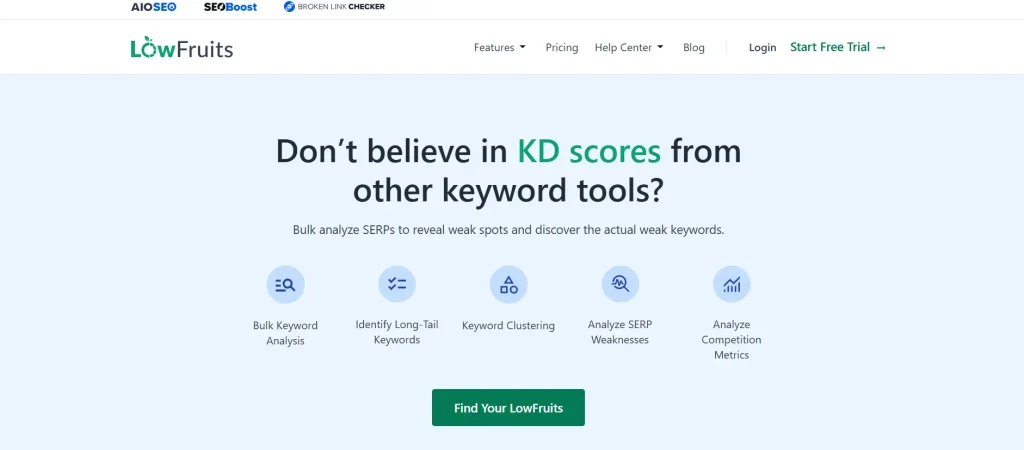
LowFruits is not just a keyword research tool it’s one of the easiest ways to discover and cluster low-competition keywords at the same time.
What makes it different is how it analyzes real Google SERPs to group keywords together. Instead of guessing relationships between keywords, it looks at which pages are ranking for them and builds clusters based on that overlap.
Pricing & Access:
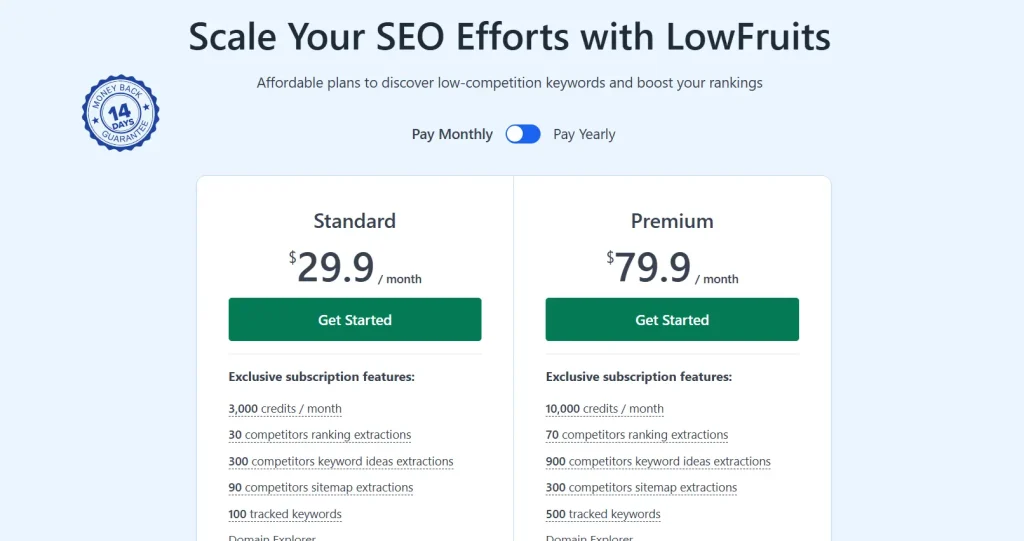
LowFruits is a paid tool with a montly amount of 29.9 dollars, but it works on a flexible model. You can either use pay-as-you-go credits or subscribe monthly depending on your usage. There is no fully free version, but small trial credits are often available to test the tool before committing.
Pros:
- Great for finding low-competition keyword clusters
- Very beginner-friendly interface
- Helps prioritize “easy win” content opportunities
Cons:
- Not built for large enterprise-level keyword lists
- Focused more on discovery than deep content strategy
Best for: Small sites, bloggers, and quick SEO wins
2. Surfer
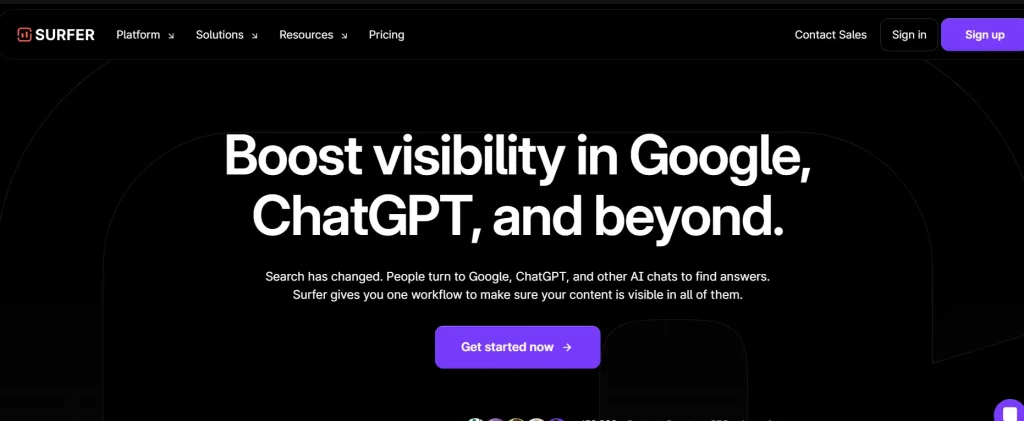
Surfer takes a slightly different approach. Instead of just grouping keywords, it helps you build entire content structures around a topic.
Its Topical Map feature is where keyword clustering becomes more strategic. You start with a main keyword, and it breaks it down into subtopics, supporting ideas, and content suggestions.
Many SEO writers use it when building pillar pages because it helps them understand what supporting articles are needed to fully cover a topic.
Pricing & Access:
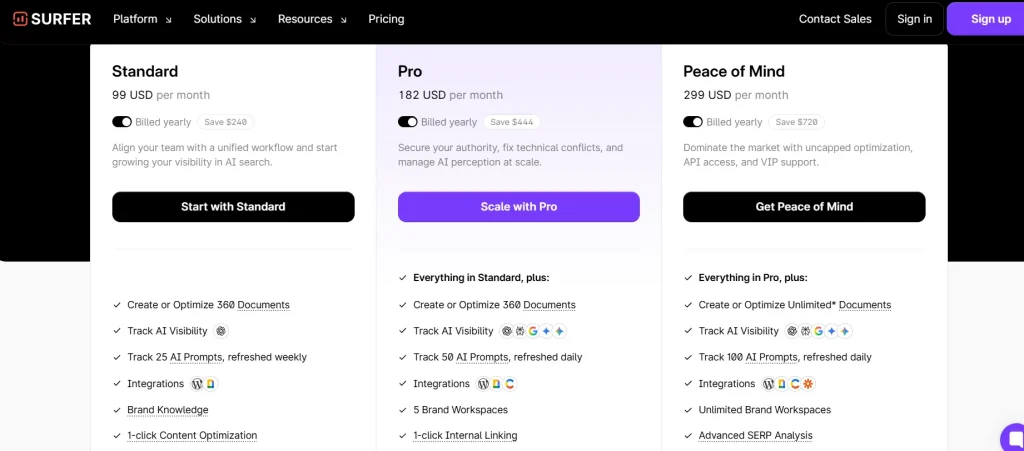
Surfer is a premium tool with plans starting around $99/month. It does not offer a full free version, but it usually includes limited trials or tool previews depending on promotions.
Pros:
- Excellent for building topical authority
- Strong content planning and visualization
- Helps structure full content hubs
Cons:
- Not ideal for uploading large keyword lists
- Can feel complex for beginners
Best for: Content strategists and SEO content teams
3. Semrush
Semrush is one of the most complete SEO platforms available, and its keyword clustering capability comes through its Keyword Strategy Builder.
What it does is instead of just grouping keywords, it organizes them into pages, subtopics, and content clusters that can directly become part of your website structure.
It’s especially powerful when you’re doing competitor research because you can see what topics competitors are ranking for and how they structure their content.
Pricing & Access:
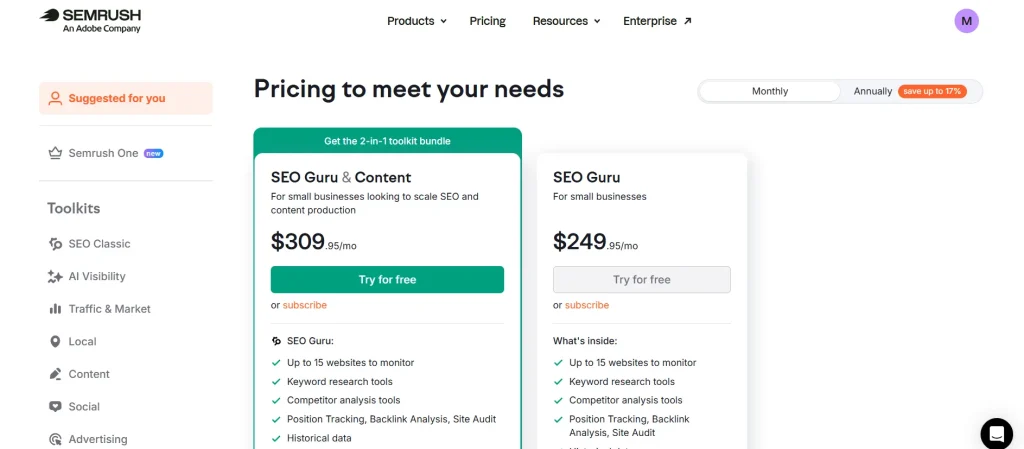
Semrush is a premium platform starting around $309/month. It also offers a limited free trial for new users, which is usually enough to test core features.
Pros:
- Extremely powerful SEO data ecosystem
- Great for competitor-based clustering
- Ideal for large-scale SEO campaigns
Cons:
- Expensive for solo users
- Steeper learning curve compared to other tools
Best for: Agencies and advanced SEO professionals
4. Keyword Cupid
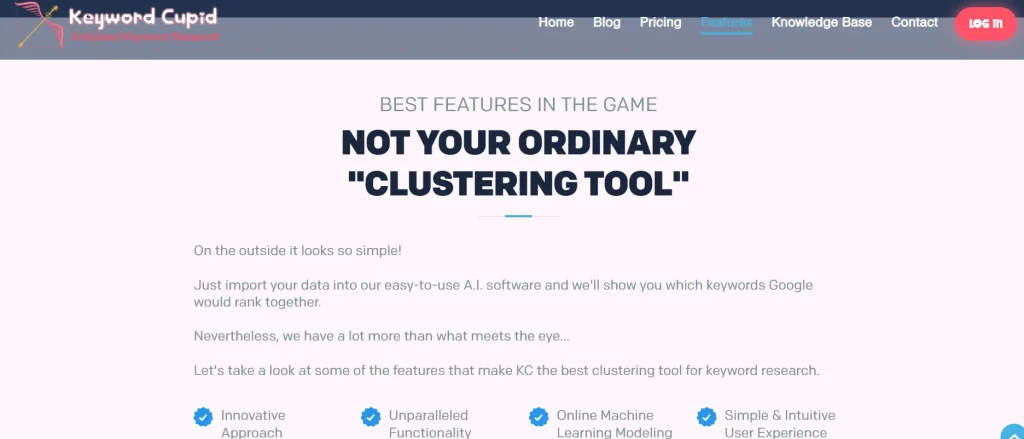
Keyword Cupid is one of the most specialized keyword clustering tools because it focuses entirely on SERP overlap. Instead of using guesses or semantic matching, it looks at real Google results and groups keywords only when they share ranking URLs.
It’s particularly useful when you already have a large keyword list and want to organize it into meaningful SEO clusters for site structure or content planning.
Pricing & Access:
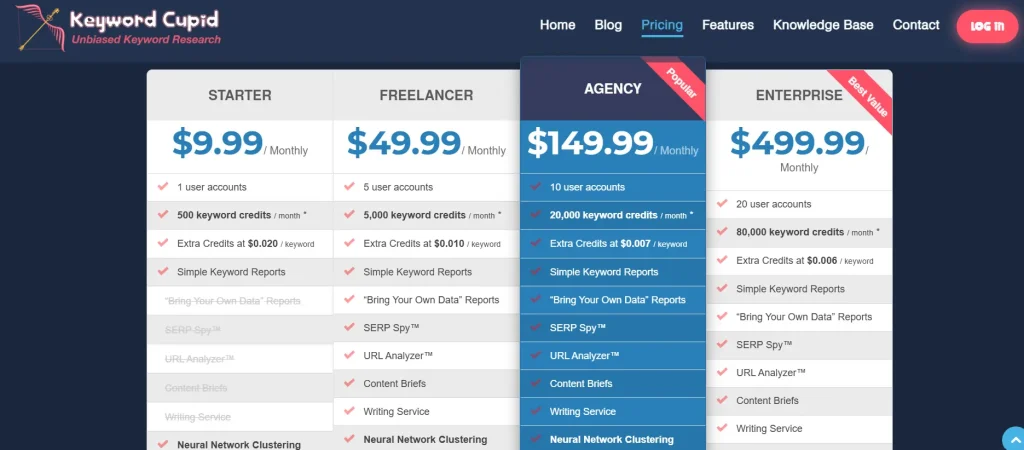
Keyword Cupid is a paid tool with a starting price of $9.99/monthly. It doesn’t have a fully free version, but it does offer trial credits depending on the plan.
Pros:
- Very accurate SERP-based clustering
- Excellent for large keyword datasets
- Great for building site architecture
Cons:
- Not suitable for keyword discovery
- Requires some SEO experience to use effectively
Best for: Advanced SEO users with large keyword lists
5. SE Ranking
SE Ranking is a more affordable SEO platform that includes a Keyword Grouper tool for clustering. It works by analyzing SERP similarity and grouping keywords accordingly while also showing useful SEO metrics like search volume and keyword difficulty.
This makes it a practical option for freelancers or small businesses who want clustering without paying premium tool prices.
Pricing & Access:
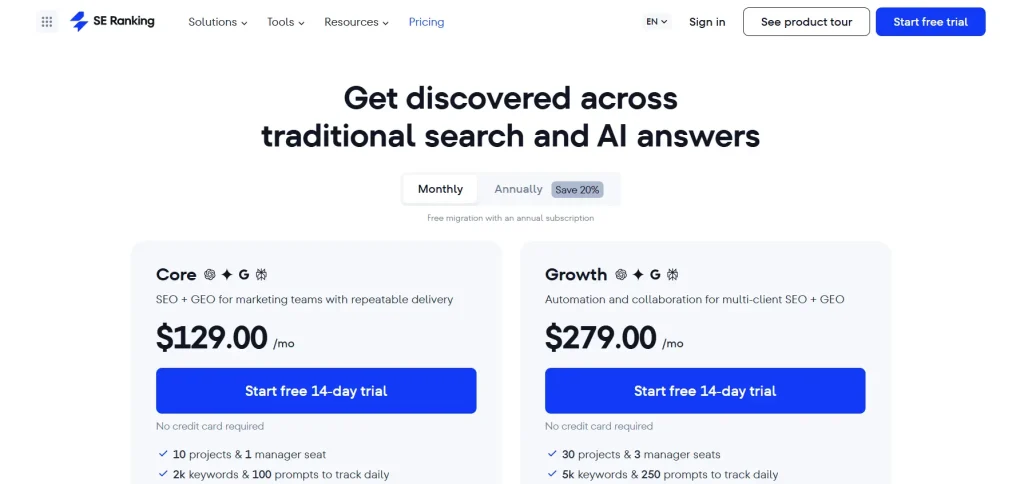
SE Ranking starts at around $129/month and typically includes a 14-day free trial depending on the plan. You can further read the SE Ranking complete pricing and review guide.
Pros:
- Budget-friendly compared to competitors
- Simple and easy-to-understand interface
- Good balance of features and pricing
Cons:
- Less advanced clustering logic
- Limited visualization compared to high-end tools
Best for: Freelancers and small businesses
Comparing the 5 Best Keyword Clustering Tools:
Below is a quick comparison table between all the tools:
| Tools | Best for | Free Version | Starting Price | Beginner Friendly |
| LowFruits | Low-competition keyword discovery | Limited trial/ credits | $29.9 /month | yes |
| Surfer | Content strategy & topical maps | Limited trial/ credits | $99/month | Moderate |
| Semrush | Advanced SEO workflows | Free version available | $309/month | Moderate |
| Keyword Cupid | Bulk keyword clustering | Limited trial credits | $9.99/monthly | No |
| SE Ranking | Budget-friendly SEO clustering | 14-day free trial | $129/month | Yes |
What Redditor’s Have to Say About Keyword Clustering Tools?
As per this Reddit thread, most SEOs agree there’s no single perfect keyword clustering tool. They usually rely on SERP-based tools like Semrush, Surfer, or Keyword Cupid, but still double-check clusters manually in Sheets or Excel to avoid wrong groupings.
Overall, the main takeaway is that keyword clustering tools work best when combined with human review, not used blindly, and I completely agree to that.
Final Thoughts
Keyword clustering tools are no longer optional if you’re serious about SEO. They help you move away from random content creation and into structured, intent-driven content planning, which is exactly what Google rewards today.
Whether you’re running a blog, an affiliate site, or a full SEO campaign, the real advantage comes when you stop targeting keywords individually and start building clusters of intent-based content.
FAQs:
What are the 4 types of clustering?
The main types are hierarchical, partitioning, density-based, and grid-based clustering. Each method groups data differently based on structure, distance, or density patterns.
What are the 4 types of keywords?
The four main types are short-tail, long-tail, informational, and transactional keywords. They differ based on length, search intent, and user behavior.
What is a clustering tool?
A clustering tool is software that groups related data points—like keywords—based on similarity or shared patterns. In SEO, it helps organize keywords into meaningful topic groups.
What is a keyword cluster?
A keyword cluster is a group of related keywords that share the same search intent or topic. Instead of targeting single keywords, you target the whole cluster with structured content.
Why are keyword clustering tools important for SEO?
They help you organize keywords into topic groups, making it easier to build authority and rank higher. This also prevents content overlap and improves site structure.
Do keyword clustering tools replace manual SEO work?
No, they speed up the process but still need human review for accuracy. Most SEO professionals combine tools with manual SERP checks.
Which is better: manual clustering or tool-based clustering?
Tool-based clustering is faster, but manual clustering is more accurate for intent validation. The best strategy is to use both together for best results.