

In the SEO circles, there is a common joke that if you are looking to hide a dead body, it is better to dump it on page 2.
The fact is that 1st-page search ranking positions capture around 40% of a keyword’s total CTR. Page 2 gets just 0.63% of the clicks. Getting ranked on Google is no longer about tricks, shortcuts, or keyword stuffing. It is the traffic, leads, and revenue each day that help in appearing on the first page.
The right approach can help you rank your website on Google in 2026. This is possible through proven, future-ready, and SEO-focused practices that drive growth, visibility, and long-term results across Google ranking factors.
What is the Google Ranking Algorithm?
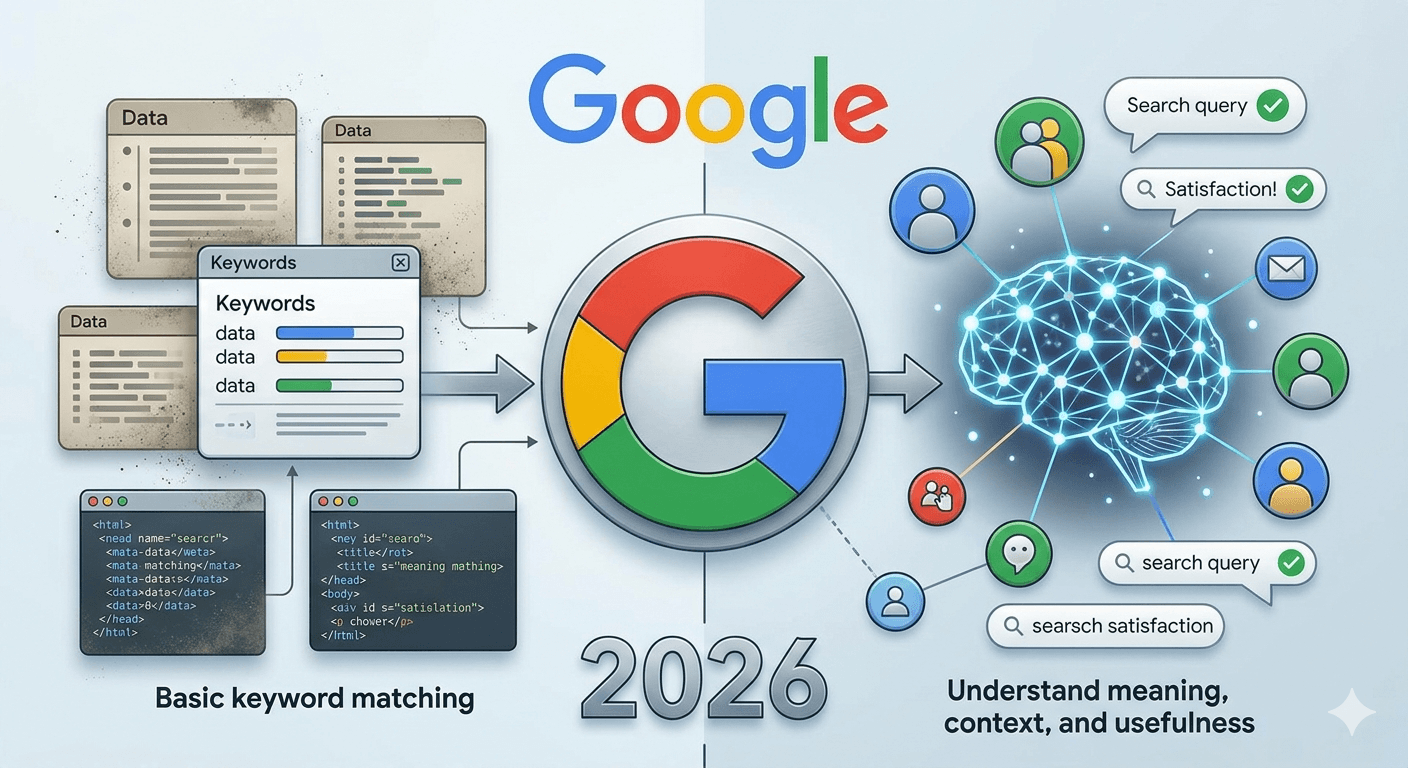
Google’s algorithm is not a single formula. It is a collection of systems that are designed to answer core questions. Over the years, Google has moved away from keyword matching towards meaning, context, and usefulness. Today, rankings are influenced by Google ranking factors like:
- Quality of the content and depth.
- Search intent alignment.
- Real-world experience and expertise.
- Trust and credibility.
How Google Ranking Algorithm Works in 2026?
Google’s algorithm has become smarter, human-focused, and intent-driven. Now, by instantly scanning keywords, it enhances how useful, reliable, and satisfying the website is for users. These are part of modern Google SEO ranking factors.
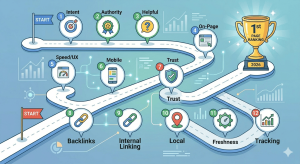
Step#1: Understand search intent
Every Google search has a hidden purpose. If your page lacks that purpose, it will not rank, no matter how optimized it is. There are four categories of search intent.
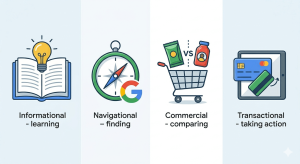
- Informational (learning something)
- Navigational (finding a brand or page)
- Commercial (comparing options)
- Transactional (ready to take action).
Therefore, if you want to rank in 2026, your content must clearly answer why the user searched in the first place. Pages that fail to solve problems clearly outperform pages that simply repeat keywords.
Worth Reading: Future of AI Search Engines: Things You Need To Know
Step#2:Focus on Topic Authority, not only Keywords
Single keywords are no longer enough. Google now ranks those that demonstrate topical authority. Instead of writing one page and moving on, build content clusters that fully cover a subject. Your layout can be in a way like:
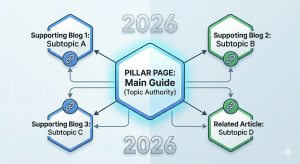
- One main guide page.
- Supporting blogs that explain the subtopics.
- Internal links connect everything.
This will show Google that your website understands the topic deeply and is not superficial, aligning with a strong Google ranking factors SEO checklist.
Step#3: Create Content that is Actually Helpful
In 2026, Google filters out content that feels generic or is written solely for ranking purposes. The characteristics of great content are:
- It answers all questions clearly.
- Use simple and easy language.
- It provides real explanations.
- Avoids unnecessary fluffs.
- Feels like it was written by someone who understands the topics.
Step#4: Optimize On-Page SEO the Right Way
On-page SEO still matters, but it is important that it feels natural. There are some areas where you need to pay attention to for a better ranking.
Worth Reading: What is Zero Click Search And How to Get Traffic in 2026
Page title optimization
Make sure that your title clearly explains what the pages are about while encouraging clicks. Good titles are always clear and not confusing, match search intent, and avoid clickbait.
Meta description optimization
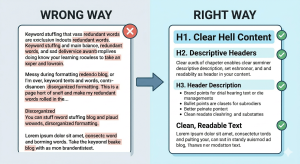
Although this is not a direct ranking factor, a strong meta description improves click-through rate, which indirectly helps rankings. There should be one clear H1 and organized H2 and H3 sections. This helps both users and search engines understand your content flow.
Natural keyword usage
Use your primary and related keywords naturally in headings, introductions, and conclusions, and body content. Make sure that you are not repeating the keywords unnaturally. Google penalizes forceful optimization.
Step#5: Improve Website Speed and User Experience
User experience is a major ranking factor. Google favors websites that load faster on mobile and desktop, are easy to navigate, have clear layouts, and work smoothly across all devices.
Slow websites can lose rankings, even with good content. Make sure that you optimize images, reduce unnecessary scripts, and use a clean design to improve both SEO and conversions.
Step#6: Mobile Optimization is Non-Negotiable
Most users search for information on mobile devices. Google indexes and ranks your site based on mobile experience first. Your website should be fully responsive, have a readable text size, mobile-friendly buttons, and avoid intrusive popups. A poor mobile experience directly hurts rankings.
Step#7: Build Trust through Authority Signals
Google evaluates whether your website feels reliable. If you have entered clear business information, about and contact pages, with consistent branding, transparent policies, and quality backlinks. Websites that feel anonymous or incomplete struggle to rank over the long term.
Step#8: Earn Quality Backlinks
Backlinks are still important, but the quality is more important than the quantity. A few strong links from the relevant websites are more powerful than hundreds of low-quality links. Good backlink sources are industry blogs, business directories, partnerships, PR mentions, or guest contributions. Make sure that you avoid paid or spam links, as Google detects them easily in 2026.
Step#9: Use Internal Linking to Strengthen Pages
Internal links help Google understand your website structure and distribute authority. Using connected related content helps users explore more pages, improves indexing, and strengthens important pages. These improve rankings across your site.
Step#10: Optimize for local SEO
If you are serving a local-based business, local SEO plays a vital role in ranking. The key local ranking factors include accurate business information, location-specific content, customer reviews, and local relevance. Through local optimization, you can help your website appear for nearby searches, resulting in faster conversions.
Step#11: Keep Content Fresh and Updated
Outdated content will begin losing rankings with time. Make sure that you update content by improving its accuracy, signal relevance to Google, helping maintain rankings, and boosting click-through rates. When refreshing existing pages, it often delivers faster results than creating new ones.
Step#12: Track Performance and Improve Continuously
Remember, SEO is never a one-time task. You must keep tracking keyword rankings, traffic behaviors, page engagements, and conversion paths. Collecting data helps understand what is working and what needs to be improved, and answers how to improve Google ranking.
Common SEO Mistakes that Hurt Rankings in 2026
Even with the right keywords and good content, small mistakes can still hold your website back from ranking well. Many people focus so much on pleasing Google that they forget about the real reader. In 2026, that can hurt your results more than ever.
- Writing for search engines instead of users.
- Keyword stuffing.
- Ignoring mobile experience.
- Publishing thin content.
- Buying backlinks.
- Neglecting internal links.
Once you fix these issues, you will see a significant improvement in your rankings.
Find out more about SEO: 11 Strategies to Improve Performance with AI
Conclusion
Getting ranked on Google in 2026 is about clarity, usefulness, and trust. Websites that focus on helping users, provide value, and maintain strong technical foundations consistently outperform competitors. SEO is never about chasing algorithms, it is about building a website that Google wants to recommend. With the right approach, ranking higher is not just possible but sustainable.